

BRE 365 Soakaway & Infiltration Testing
Find out whether infiltration drainage will actually work before the drainage design relies on it.
Clear undertakes BRE 365 soakaway testing at the proposed drainage locations, records the ground and groundwater conditions that affect infiltration, and provides rates that can be used by the drainage engineer.
Results within one week of completing testing. Expedited results can be arranged for tight programmes.
Test where the drainage is actually proposed
Infiltration can vary significantly across a site. Test locations and depths should reflect the proposed drainage layout rather than convenient areas of open ground.
Understand what is controlling the result
We log the soils encountered and consider whether the measured rate reflects permeable natural ground, cohesive material, Made Ground or another local condition.
Check whether the drainage can be placed above groundwater
A usable infiltration rate does not automatically make a soakaway viable. Groundwater level and the available separation beneath the proposed system also matter.
The important question is not whether water drains away. It is whether infiltration is workable for the proposed development.
A soakaway assumption can affect the drainage strategy, layout and planning submission. Testing should therefore be completed at representative locations and depths, with the result interpreted alongside the ground conditions and groundwater.
Where infiltration works, the drainage engineer gets the rate needed to progress design. Where it does not, the testing provides the evidence needed to move to an alternative strategy.
Test the proposed drainage, not an abstract patch of ground.
We use the drainage layout and available ground information to make the testing representative of the decision the drainage engineer needs to make.
Review the proposed drainage arrangement
Confirm the intended locations, depth and any existing ground or groundwater information before testing starts.
Excavate and log the test locations
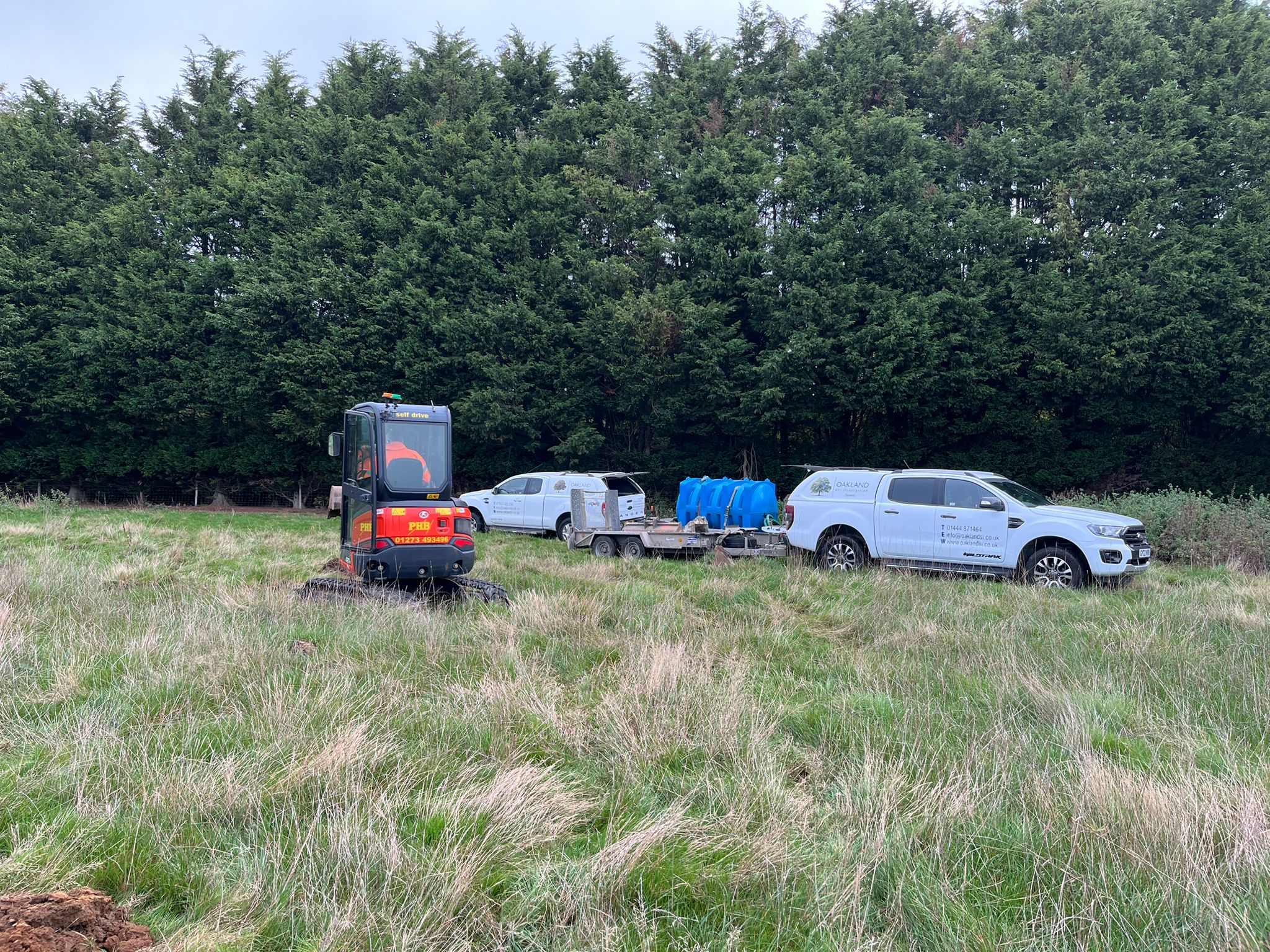
Excavate the trial pits to the required depth and record the ground conditions and groundwater observations relevant to infiltration.
Complete the infiltration testing
Fill and monitor the test pits in general accordance with BRE 365, completing repeat cycles where the conditions allow.
Interpret the rate in the context of the site
Calculate the infiltration rate and explain whether the result, geology and groundwater conditions support infiltration drainage at the locations tested.
What should the testing tell you?
We report what the evidence supports. Each outcome is a legitimate answer, and the first is often the most valuable.
Infiltration drainage is workable
Where the ground drains at a usable rate and groundwater conditions are suitable, we provide the design infiltration rate for the drainage engineer to use in the next stage.
Infiltration may work, but with constraints
Where rates are slow, variable or limited to particular strata or locations, we explain the constraint so the drainage engineer can decide whether infiltration remains practical.
Infiltration drainage is not suitable
Where the ground does not infiltrate effectively or groundwater prevents a suitable soakaway depth, we say so clearly. The result then provides evidence for the project team to progress an alternative drainage strategy.
Results the drainage engineer can use.
The report records how the testing was completed and gives a clear interpretation of what the results mean for infiltration drainage.
Explore how BRE 365 testing works, how infiltration rates are used and what the results mean for the drainage strategy.
A recent project.
What this looked like on a real site, and what the client could do as a result.
Giving the drainage engineer the infiltration data needed to keep design moving.
For Invinity Energy Systems' 20.7 MWh flow-battery project, Clear completed BRE 365 infiltration testing and issued the results within the project programme, giving the engineering team site-specific data to finalise the drainage layout and SuDS design.
Read the case study →Read more on this.
Plain-English guides from our insights, written for developers, buyers and their advisers.
Soakaway Testing: A Developers Guide
What BRE 365 soakaway testing involves, when it is needed for planning, and how infiltration results support SuDS and drainage design.
Infiltration Testing For Soakaway Design in the UK
UK-wide BRE 365 infiltration testing. Accurate rates & suitability comments for SuDS & Building Standards compliance. Results for your drainage engineer.
Phase 2 Site Investigation Explained – Methods and Outcomes
Discover methods like trial pits and boreholes with timescales, and how Phase 2 builds on Phase 1 to manage land contamination risks effectively.
Common questions.
How quickly will I get results?
Our standard is within one week of completing testing. Where the programme is tight, we can expedite, and on some projects results have been analysed and reported on the day of testing.
Why test at the actual soakaway location?
Infiltration can vary significantly across a site and with depth. Testing where the soakaway will be built, at its intended depth, gives rates the design can rely on.
Do I need groundwater monitoring as well?
Often, yes. Soakaways need enough unsaturated ground beneath them, so where groundwater could be shallow we install a monitoring well in the same visit and record levels. That gives the designer both the infiltration rate and the depth available.
Do you do percolation testing for foul drainage?
Yes. We carry out percolation testing to Building Regulations Part H for septic tank and treatment plant drainage fields, often alongside BRE 365 testing.
Get a quote for your site.
Send us the address and what you’re planning. A senior consultant will reply with a quote and the right first step, usually within one working day.